

“Mom Rage” and Mental Health: The Gaslighting Burnt out Moms
I open up my messages on any given day and I am inundated with cries for help: stories from moms who are burnt out and don’t know what to do.
Moms, sharing struggles they haven’t shared with anyone else.
Moms, lamenting about how hard it is to do it all.
Moms, feeling angry about their unmet needs.
Moms, feeling ashamed of their anger.
Moms, spiralling.
As a digital creator who advocates for the wholeness of mothers and author of my upcoming book Honest Motherhood, I am no stranger to the feeling of not feeling like I am enough for the task at hand.
I am still shocked, that after 5 years of sharing my honest truth about motherhood— that for some women— I am the first person to say a hard truth about motherhood out loud.
Some of those honest truths about motherhood I’ve said out loud?
We are carrying too much and it’s breaking us.
Mother’s should not be the rememberer of all the things for all the people all the time.
Not everything we label “motherhood” is actually motherhood. It’s primarily: domestic and invisible labor.
It’s 2025. A time in which we are meant to be a society of equality and progressive thought. Yet, women are still carrying the majority of the unpaid, undervalued, emotional, mental and physical labour of keeping a household running.
We have become so accustomed and socialized to believe and assume that these roles belong to women that they have become intrinsically tied to the label of “mother”.
Yes, caring for children and our homes is most certainly one of our main roles as mothers. But there is so much more to it. For starters, there is the obvious answer: the children have secondary parents (a lot of the time). There’s also this— family, friends, the school, the workplace and society at large still expects women to carry it all. It’s invisible work that weighs heavier than many of us can even put into words.
The irony? All the cumbersome invisible, mental and domestic labor that nobody sees? It’s what is causing so much of our chronic stress that it impacts our ability to love and enjoy motherhood as much as the world says we should— or for many— as much as we would like.
Moms aren’t mad because they don’t love their children. They are full of rage because they are exhausted from doing it all and feeling like they are screaming into the void about it.
Motherhood, ‘Mom Rage’ and the Maternal Mental Health Crisis
On May 30th, 2022 I made a viral Instagram post and TikTok about this topic and the results came flooding in: Moms are exhausted and we’re sick of being told it’s an “us” problem.
@libbywardofficial It’s not a you thing #socialnorms #motherhood #momlife #momrage #mommyrage #ppd #martyrdom #motherhoodunplugged #feministmom #Mentalload #defaultparent #maternityleave #momsgetit #Parenting ♬ original sound – Libby Ward
A few months later, I was asked to speak on this issue on The Tamron Hall Show in NYC. See the video clip below:
The Motherhood Burnout Epidemic: Striking a Chord With Burnt Out Moms
As it turns out: moms everywhere were exhausted from carrying everything and even more tired of being blamed for it.
Some blamed the pandemic. And sure, the pandemic immensely exacerbated the plight of mothers carrying the domestic load while juggling children and work— but the pandemic is not the root of the problem.
The structural inequality is the root.
The cultural norm that unpaid labour at home is ‘women’s work’ is one a many parts of the problem. Women are expected to work like they have to family and raise kids like they don’t have a job. Meanwhile. Dads are celebrating for knowing what size shoes their kids wear.
It’s a widespread social issue but everyday moms aren’t necessarily seeing what is happening as a social issue. Burdened by the worries, stresses, and tasks of everyday life, moms are too busy taking care of everyone else and trying to survive without breaking down that they end up looking inward and asking “what is wrong with me?”
They say things to me like “Why can’t I handle this?” or “I am not cut out for this”.
Moms are sold messages about self-care, given tips and tricks on reducing their exhaustion and anger, and told by their doctors to try reducing stress.
What about the systemic issues causing our cortisol to soar through the roof?
Mothers are sold the message that it must be a mental health condition that is stopping them from functioning as well as they think they should. Moms are medicated. Silenced. Told, it’s a ‘you’ problem. Women are told to just lower their expectations and calm down. They are told it’s their responsibility to let their partners know to care for them. Mothers are made to feel as though the load they are carrying for their family feels heavy because of a character flaw or an internal weakness.
The Numbers Don’t Lie: Moms are Past Their Tipping Point
I post content daily about motherhood, mental health, trauma and other related topics. I have a combined community of over 2.0M followers. Like most digital creators, my content sees a mix of engagement. Sometimes, posts go “viral” – attracting millions of views, tens of thousands of comments and direct messages that I struggle to keep up with. I share these numbers to highlight that engagement with my content is like a pulse: A pulse on what other mothers are feeling, struggling with or hoping for.
In addition to the deep personal relationships and connections I have within my community, at times it also feels like my community is a focus group on motherhood. Their reactions to my content show me what is important, what is relevant, what is needed. My post on May 30th, 2022 still rings true today. Still the post has traction. At the time, notifications lit up my phone persistently. DMs were streaming in. I shared a thought, and my community screamed back YES!
Moms are sick of being burnt out and told it’s their problem.
But moms are not weak, the load is simply too heavy.
The solutions we are given are just more thing to do.
Taking care of themselves better, asking for “help”, going to therapy, buying more books, streamlining their lives and “slowing down”— this ideas sound great. But in our individualistic society where villages are sparse and money is tight? How?
Nobody is talking about the fact that moms are carrying a load that is far too heavy to begin with. That’s why I call it gaslighting.
What is Gaslighting? Moms Being Made to Feel as Though They are The Problem.
According to Psychology Today: Gaslighting is an insidious form of manipulation and psychological control. Victims of gaslighting are deliberately and systematically fed false information that leads them to question what they know to be true, often about themselves.
They may end up doubting their memory, their perception, and even their sanity. I call it gaslighting because as a society we continue to perpetuate narratives that the legitimate negative experiences or feelings that mothers are having due to gendered and structural inequality and unattainable standards are actually problems within us. In other words, we are set up.
We are expected to work like we have no kids and raise kids like we don’t work. We’ve got to juggle it all and handle a disproportionate amount of the domestic labour and child rearing compared to the men we are partnered to. Then we are told to fix ourselves.
Here is the thing: It is natural to be upset, tired, and angry about the heaviness of our expectations, but we are treated like we shouldn’t be. We are treated like there must be a problem with our capacity, our mental health or our abilities.
The worst part? Many mothers believe it. By no fault of their own, their perception shifts to doubting themselves, their abilities, their worth and their sanity. What’s worse? We put it on their shoulders to fix – on top of everything else.
Are you angry? Just calm down.
Are you tired? Get some sleep.
Is the house too much? You’re responsible for asking for “help”.
Are you depressed? Eat better, run, take medication.
Anxious about the kids? Don’t be.
Overwhelmed? Make a better plan. Simply, “do less”.
But who will do the things she doesn’t?
The only way to lessen the load on mothers’ shoulders is for someone else to take some of it onto theirs. But it often seems no one is willing. And if they are, then she better count herself lucky. As a culture, it is easier to pretend she is imagining how heavy it is in the first place. It’s easier to make her think there is something wrong with her.
The Missing Factor in “Self-Care” For Mom Burnout
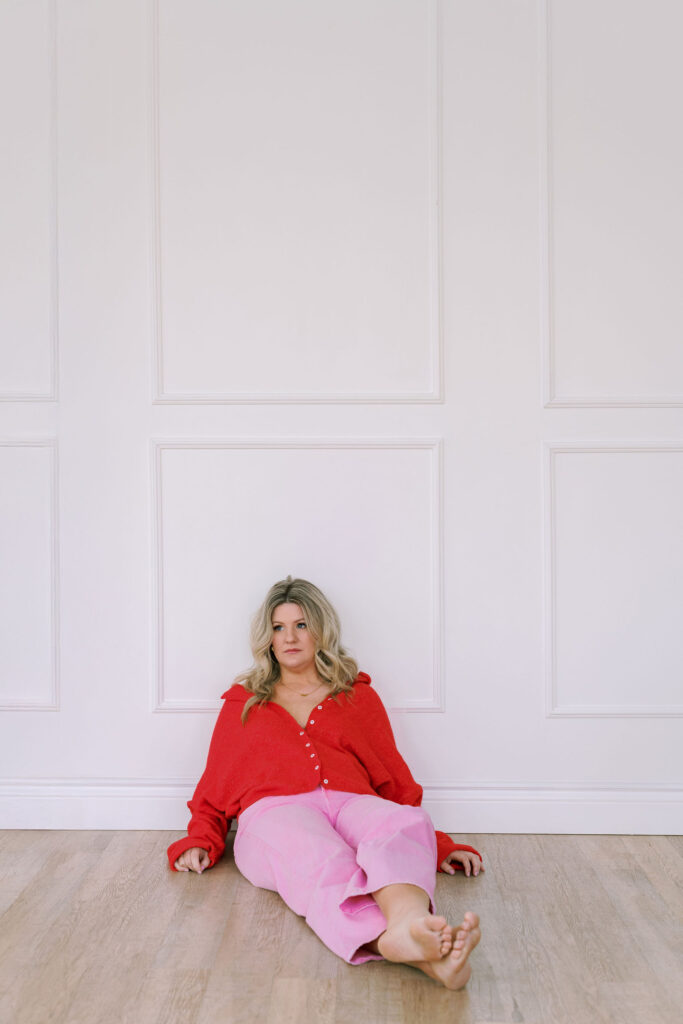
Self-care is great, but it’s not enough. Moms need a family culture where taking care of mom is normal, expected, and guilt-free. Too often, prioritizing our own needs feels like another chore on an endless list. So I ask: Where are the caregivers for the caregivers?
We shouldn’t have to beg for it. Mothers are the ones caregiving for everyone else, spending their mental, emotional and physical energy making sure the needs of their family members are met.
But who is looking after them?
Who is scheduling their “me time”?
Who is cooking their food?
Who is telling them to go to sleep?
Maternal Mental Health is Real. So what gives?
As a mental health advocate, it needs to be said that the mental health crisis among mothers is real. There are several, very real and treatable mental health disorders. BUT, when we label the exhaustion, burnout, anger, resentment, worry and stress of mothers as “mental health,” regardless of the circumstance or social context, we do her, her family and all of society a disservice.
The fact is that higher stress levels, lack of access to support, sleep deprivation, being overworked, financial stress, and perceived incompetence or insignificance are common risk factors for developing and exacerbating physical and mental health problems.
And these are all things highly connected to caregiving, the mental load, and emotional labour that mothers do at a much higher proportion than men. Mothers are likely to struggle less with their mental health if the social structures surrounding them are supportive and gendered roles within their homes were more balanced.
Mom Burnout Is a Systemic Problem
Despite progress, women still carry the majority of parenting, emotional, and domestic labor — whether they work outside the home or not.
A 2018 Statistics Canada study confirms that women perform a disproportionate share of unpaid work, and things have only worsened since the pandemic. In my Instagram poll:
- 11,000+ women responded
- 96% handle the mental load of parenting
- Over 80% handle most domestic work
Anger In Motherhood Is a Signal. We Need Systemic Change.
We need to start treating the anger of North American women with the attention it deserves.
Our emotions are information. Anger is what motivates us to create change.
So, instead of shaming mothers for their frustration, let’s look at it’s validity.
Instead of shaming ourselves for our anger we should ask: which of my needs are not being met?
What is my body trying to tell me? What is the feeling underneath the anger?
Let’s use our rage to remind us to ask for help, ask for more, demand something is done so we aren’t continuing to carry it all.
When moms are supported, everyone benefits: kids, partners, communities, and workplaces.
What does change actually look like?
- Mothers feeling listening to their own rage + voicing their needs
- Partners that step up and carry the domestic and invisible load
- Policies and rights that treat women fairly
- Workplace equity and parental support
- Affordable healthcare and maternity leave
- Families sharing responsibilities equally
Change for mothers happens one household at a time.
Even if systemic change takes time, you can change the culture around you. You can change what happens in the four walls of your home.
Moms: you aren’t alone and you aren’t crazy. Let your rage exist until something changes.
Libby
Want more?
- Follow me on IG and Tiktok for daily content to feel seen and be reminded to care for yourself
- Read this blog post with my top 5 Books for Overstimulated Moms and Caregivers
- Download this actually realistic* FREE Self-Care Guide for Moms that I created
- Subscribe to my newsletter where I send semi regular real life stories full of humour and hope, plus some fun lists of things I am loving
- Buy my book Honest Motherhood: On Losing My Mind and Finding Myself, available for pre-order now