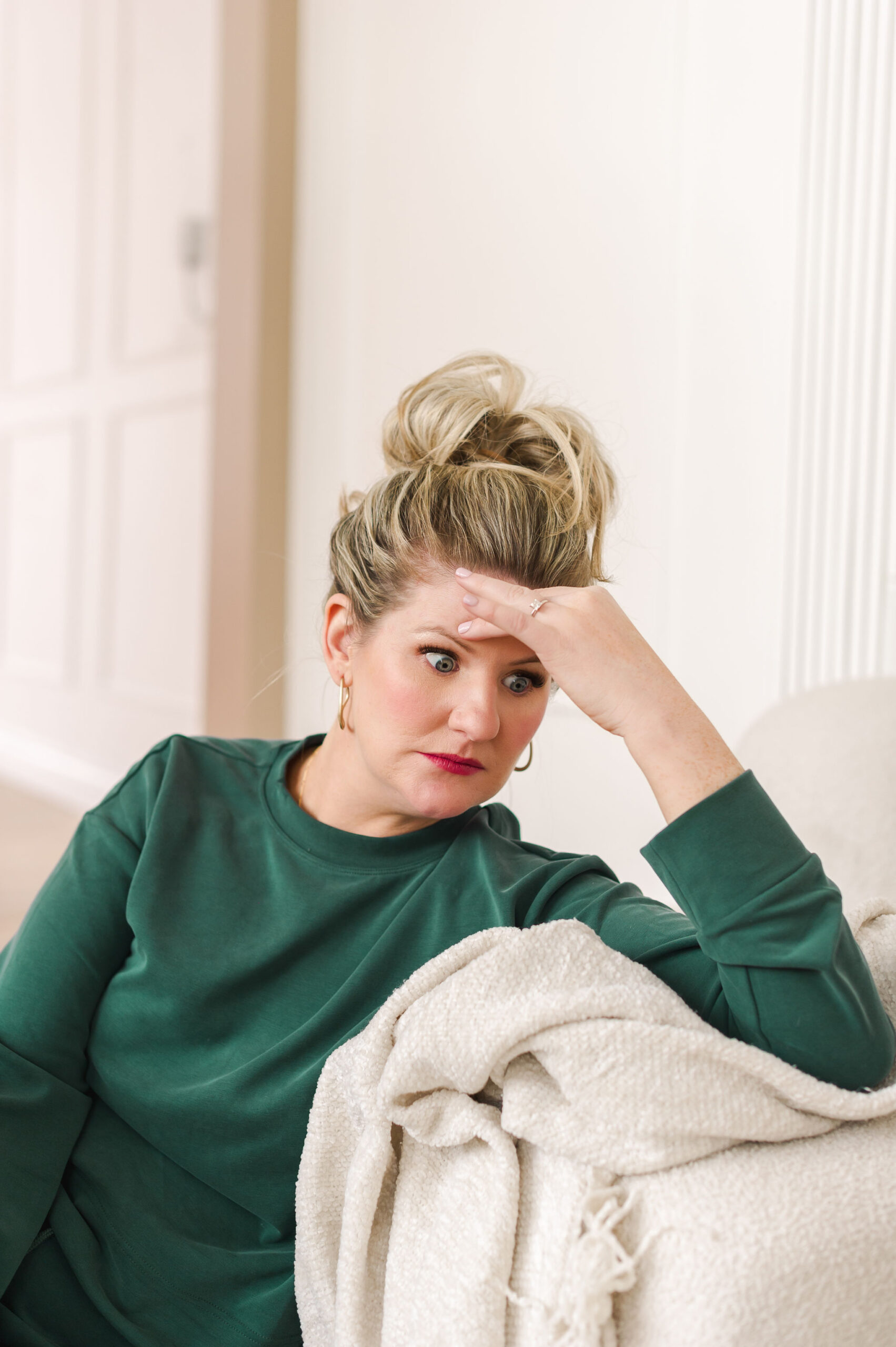


You’re Not a Bad Mom for Being Overstimulated.
Picture this:
The TV is on, you are cooking dinner while simultaneously thinking about your to do list tomorrow; one of your children is whining that they need a snack while the other one is running and yelling joyfully through the house; the fan above the over is blaring; your husband comes in for a hug and asks you a simple question like “What you do today?” or “Where are my folded sweatshirts?”. YOU’RE ABOUT TO SNAP.
You, are overstimulated.
You want to scream. Maybe you do. This is a natural and common response to someone feeling sensory overload or overstimulation and for a full list of symptoms of sensory overload you can click here.
Overstimulation is also known as sensory overload.
Sensory overload happens when your brain receives more input from your five senses than it can handle. Sounds, sights, movement, smells, physical touch—it’s all too much, all at once.
This experience is often more intense for people with:
- ADHD
- Autism
- Anxiety
- PTSD
- Depression
- Or those who identify as Highly Sensitive People (HSPs)
But you don’t need a diagnosis to be overstimulated.
Even without one of these conditions, you can still get overwhelmed when presented with overstimulating sensory input.
As a mom, this is something we deal with on a daily basis.
ALL humans have a capacity for how much of their senses they can use and process at once.
Those limits don’t disappear when we become parents. In fact, it is very common to enter motherhood feeling as though it’s the first time we’ve been overstimulated. Mothering is also the time in our lives when we have our other needs met the least. As millennial moms, most of us weren’t given the language to describe our experiences— never mind taught how to cope or regulate our emotions.
You Are an Overstimulated Mom.
Moms everywhere are being bombarded with sensory stimuli which outpace their ability to process or cope with it.
Trying to run a household and complete mental tasks while being constantly needed, touched, and hearing overlapping sounds is overwhelming. Feeling irritable because of these things is not a sign you are a bad mom, it is a sign that you are experiencing overstimulation as a mom.

A Quick Disclaimer Before We Go Further: This post shares my personal experience with overstimulation and what has helped me manage it. It is not a substitute for professional advice. If you’re struggling, I encourage you to reach out to a licensed mental health professional. Therapy was life-changing for me, and it could be for you too. If you’re in crisis, call 911 or go to your local emergency room. Help is out there. You are worthy of it.
You’re Not Alone If You’ve Felt Like This
As a mom with small children at home, noise sent me into mental oblivion.
The overwhelm was palpable.
The rage was raging.
The fight or flight would overcome me.
I’ve shared about my experiences with overstimulation as a mom and as a mom with ADHD quite a bit on social media. This is one of the first times I did— and the comments made me feel so seen.
I spent a long time feeling guilty about feeling overstimulated. I thought it meant there was something wrong with me. Turns out, it’s actually quite common to respond to overstimulation with a fight or flight response, rage or disassociation.
The truth? I just needed help.
If you are here, I am assuming you might need some help with overstimulation as a mom, too. After all, those kids? They are going to keep being kids.
What Can You Do to Cope With Overstimulation in Motherhood?
These 10 practical strategies helped me. Some of them are preventative. Some of them are integral in the moment. Some of them help get you through the aftermath of the overload. Take what resonates. Leave what doesn’t. You know more about what you need and what helps you than you likely give yourself credit for.
Want to skip all this reading?
Here is the long and short of it.
Let go of perfect so that you can get some time and space back. Know in your bones that is feels hard because it is. Keep going. You are not alone. Otherwise, read on.
1. Do Less
I know. It’s a lot easier said than done.
But we all know that when we are too busy, have too many things on the go or our schedule is packed, we are raging balls of stress. When we are stressed, we can’t think straight. Literally: there is scientific evidence for this. In a stressed state, we are even more prone to feeling the effects of overstimulation. By simply taking out activities or spreading them out throughout the day or week, it creates space for us to recharge, for our sensory system to get a break, and for us to process all the input that never seems to cease.
2. Think Less (Consider the Mental Load)
Sensory overload isn’t just about noise. It’s about everything you’re holding in your head:
What to pack for daycare; when to order more toothpaste; the emotional energy of keeping everyone alive and on time.
Sure, the sounds our children make and the ways they won’t stop touching us contributes to overstimulation. But what about what our mind is filled with? The mental load that we carry as moms also takes up immense capacity. I know for a fact that if I have less on my mind, I am less bothered by noises. Finding ways to minimize our mental load goes a long way. You can:
- Engage your partner to in taking on more mental responsibilities (yes, easier said than done)
- Find a system that can hold the list outside of your brain (shared notes in the notes app, shared task lists in Monday.com, shared to do lists on the fridge)
- Do less. This goes back to tip #1. Just remember the less you do, the less you have to think about it.
- Talk to your partner. Make the invisible visible.
- Ask yourself: What mental tasks could someone else carry?
Lighter mental load = more sensory room. More ability to think straight.
3. Quit Multitasking
We all think we’re amazing multitaskers. Spoiler: we’re not.
Prior to parenting it was a little easier to multitask because we could control what sensory stimuli would come our way, but as parents it’s often impossible. As women, we are known for our amazing multitasking abilities.
We can do it all! Or can we?
Research says that technically, we can’t. We just think we can. The problem is that when we “multitask” our attention is divided, which means our sensory processing is divided too. This leaves a very small window for any other input (Kids). When we attempt to do thirty-five things at once, it leaves no room for natural parts of parenting (being touched, talked to, or needed to look at a sweet jump off the back of the couch). Leaving space for sensory interruptions or unexpected needs by expecting less of ourselves goes a long way in negating sensory overload.
4. Put Your Phone Down
There is no other way to say it. Do we live in a digital world? Yes. Do all the school, daycare, work, family, and life commitments communicate with us through email and a billion apps we can hardly keep track of? Yes. Do we need our phone to stay connected, fight off loneliness and stay in touch with loved ones? Absolutely. But do I ever find myself snapping at stimulation from my family because I am trying scroll my phone and be present at the same time? Certainly.
No judgement here, but scrolling on our phones all the time is another way we try to “multitask” and setting the intention to do it less can go a long way. Heard of the brick app? I hear it can help with setting screentime limits. We all struggle and we can all use some tools to help us put our phones down.
5. Schedule in Breaks and Quiet Time
Whenever we go out as a family, I end up coming home thoroughly exhausted and before I realized how much it took from me, I used to come home and be irritable with everyone. Now, I ask for quiet time when we arrive home and it is built into the routine.
Breaks are not always possible, but when they are, you should take advantage of them. Maybe you can’t check out but I am sure there are ways you can be intentional about taking time to yourself. Try being okay with things being left undone or imperfect. Sometimes, that is the only way to get time to ourselves.
If you have a partner, make your needs known. If you don’t, use technology or a late daycare pick up- anything that gives you some time. Don’t feel guilty about it. It’s preventative care for your mental health and sensory system. Taking breaks, as hard as it is, is a huge part of being able to manage the everything-ness that is motherhood that causes our overstimulation.
6. Have Touch Breaks
Touched out? Join the club. Moms of small children and babies are constantly breastfeeding, bottle feeding, being needed, hugged, climbed on, and played with to the point that they no longer want to be touched anymore. But it’s not just moms of little ones. Anyone can feel touched out. We just want our bodies to be our own for a little while. Building in touch breaks to our day can help.
Talk to your family, and explain to them that you love them dearly and you enjoy their affection.
Then promptly let them know you need to NOT be touched for a bit. Set a dang timer.
And if you’re like “Libby, my baby doesn’t get that”. I hear you. Sometimes they ARE too small. Sometimes it IS just a season. But don’t let that mean you can’t talk to your partner or start building this habit THE MOMENT you are able to.
7. Trying Journalling for Overstimulation
I know what you are thinking. How is journaling supposed to help with mom overstimulation? I used to think that: until I tried journaling.
Journaling helped me put on paper what I was actually feeling, what tasks were overwhelming me, what was unnecessary that I could let go of and what I needed to change. It helped me build self-awareness so I could get ahead of my overwhelm and overstimulation. Journaling was part of my preventative care. It helped me put words to feelings I couldn’t before so I could do something about it before I was ready to flip tables.
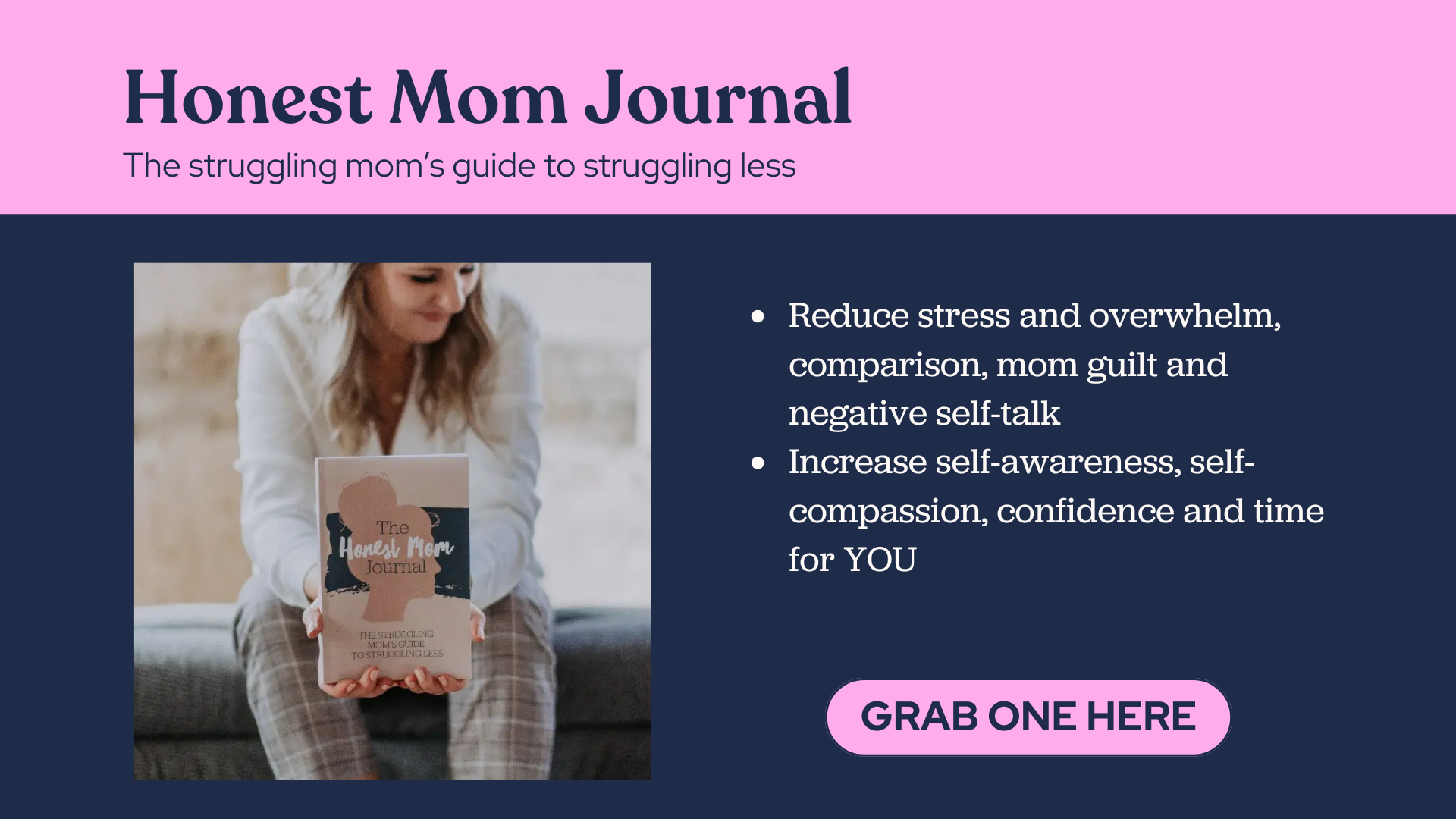
You can just write it on any old paper. But I made a guided journal for moms to help because sometimes staring at a blank paper feels like too much. You can use my guided journal if you want and it might just help you to implement the rest of these tips better.
8. Screens Save The Day
I know. I just said to put your phone down. But frankly, technology has saved me and my kids from many meltdowns—especially when I did not have any other support. For that reason I think it CAN be a really effective tool. I am not saying “put your kids in front of a screen all day and then you won’t have to deal with them or their noise”. BUT. For stay at home moms, single moms, or any moms who spend a great deal of time with their kids without another adult to step in and help—technology is sometimes the only break you get. Moms need breaks, period.
Personally, I would rather put my child in front of a screen to allow myself a moment to recharge so I can come back feeling prepared than push through my sensory overload and overwhelm, not get a break, and then snap at my kids. It’s all about balance.
9. Use Noise Cancelling Earplugs or Headphones
One of the best investments I made for my overstimulated mom brain was noise cancelling earplugs. I also love my AirPods. As someone who is hard of hearing, using earplugs or headphones, I can often still have conversations with my family. But the devices limit how much of the shrill noises I hear or the constant buzzing of kids in the house. When I wear them I can still be present with my family and keep them safe. If noise is a trigger for you, I highly recommend using some noise cancelling earbuds, even if it is just for a portion of the day.
10. Practice Preventative Self-Care
Self-care isn’t just a buzzword.
It’s a necessity. It’s how we stay steady, regulate our emotions, and keep from snapping when life piles on. The internet wants us to think self-care is a bubble bath or a $200 supplement stack. But real self-care isn’t fancy. It’s the quiet, consistent ways we tend to our bodies and minds so we can handle what sensory input or stress comes our way. Sometimes it’s saying no. Sometimes it’s saying yes — to a walk, a nap, or time with someone who fills you up. Sometimes it’s not replying to every text. Care for yourself before you’re running on fumes. Because you can’t pour from an empty cup or process sensory input when you’re already running on empty.

11. Learn About and Practice Emotional Regulation
Simply put, most of us were not taught how to regulate our emotions and becoming a mother is a surefire way to learn just how important this skill is. Emotional regulation isn’t about avoiding big feelings or pretending you are fine when you aren’t. It’s about knowing how to meet them and what to do with them. It’s noticing when your chest tightens, your patience thins, or the world starts to feel too loud — and having tools to bring yourself back to baseline.
Start by tuning into your early signals: a clenched jaw, shallow breath, or that urge to snap. Then, try a reset. Step outside for fresh air, run cool water over your hands, or take three slow exhales that are longer than your inhales. Literally, if you are about to snap? Cover your ears, close your eyes and say to yourself “I am safe”. I promise, it can help.
These tiny moments of regulation tell your nervous system, you’re safe. And the more often you practice them, the easier it becomes to recover from overstimulation before it takes over.
12. Open Up a Conversation In Your Home About It
Let your partner and your children know what overstimulation is, what causes it and how it makes you feel. Talking about our experiences and our feelings lets others know that we value our own well-being and they should too. It gives them a more in depth look into what our lives are like and also teaches empathy. It is so important to allow our families to feel like they can be part of the solution, and not just the problem.
When our kids understand what causes our stress levels to rise it empowers them to be conscious about their actions. If they aren’t able to do that developmentally yet, it sets the stage for when they are. Letting our partners in on what is going on also lets them know how they can help. Part of being a good mom is recognizing when we need help and asking for it, or needing space and taking it.
There is Hope For the Overstimulated Parent
If you are a parent and you find yourself overstimulated, overwhelmed and feeling guilty about it all, please know you are not alone.
Listen. Every single human on earth, parent or not, has a limit to the amount of stress and sensory input we can take on and process in a day.
As moms we face an onslaught of touch, sight, movement and sound stimuli at levels that nearly nobody else does. It’s no surprise that we get burnt out and overstimulated.
We all want to do our best for our kids.
Nobody wants to be the parent who screams at children who are just giggling.
Nobody wants to be triggered by a hug.
The overwhelm is not our fault, but what we do about our overstimulation and the feelings it brings up, is our responsibility.
Don’t feel guilty for being overwhelmed.
Feel proud that you are trying to find ways to change. Feel proud that you care enough about being a good mom that you read this far. Feel proud that you are learning every day. Feel proud that you are raising your children with intention.
We aren’t going to get it perfect, but we can do our best to be present and aware.
Plus, you’ve read this far which tells me you very likely are already doing so much better than you think you are.
Keep going, you are doing a great job.
Libby
Need more?
- Follow me on IG and Tiktok for daily content to feel seen and be reminded to care for yourself
- Read this blog post with my top 5 Books for Overstimulated Moms and Caregivers
- Download this actually realistic* FREE Self-Care Guide for Moms that I created
- Subscribe to my newsletter where I send semi-regular real life stories full of humour and hope, plus some fun lists of things I am loving
- Buy my book Honest Motherhood: On Losing My Mind and Finding Myself, available for pre-order now